Electrician License Requirements by State (2026)
46 of 51 US jurisdictions require a statewide electrician license or certification. 5 leave it to cities and counties. Of those, every one requires an exam and 35 define apprentice, journeyman and master tiers. Experience minimums run 2 to 7 years and application fees $14 to $450 among the states publishing a figure. Your state is in the table below.
Electrician License Requirements by State
| State | Statewide license | Experience | Exam | Application |
|---|---|---|---|---|
| Alaska | Journeyman Electrician Certificate of Fitness | 8,000 hours | Yes | $50 |
| Alabama | Journeyman Electrician / Electrical Contractor | 4 years | Yes | N/A |
| Arkansas | Journeyman Electrician / Master Electrician | 4 years | Yes | $25 |
| Arizona | C-11 Commercial Electrical / R-11 Residential / CR-11 Dual | 4 years | Yes | $100 |
| California | C-10 - Electrical | 4 years | Yes | $450 |
| Colorado | Residential Wireman / Journeyman / Master Electrician | 8,000 hours | Yes | $120 |
| Connecticut | E-1 Unlimited Electrical Contractor | 2 years | Yes | $150 |
| Delaware | Master Electrician | 8,000 hours | Yes | $172 |
| District of Columbia | Journeyman Electrician / Master Electrician | 8,000 hours | Yes | $52 |
| Florida | EC - Certified Electrical Contractor | 4 years | Yes | $249 |
| Georgia | Electrical Contractor (Class I Restricted / Class II Unrestricted) | 4 years | Yes | $110 |
| Hawaii | C-13 Electrical Contractor | 4 years | Yes | $50 |
| Idaho | Electrical Contractor | 4 years | Yes | $15 |
| Illinois | Local only | 4 years | No | N/A |
| Indiana | Local only | Not published | No | N/A |
| Iowa | Journeyman / Master Electrician | 8,000 hours | Yes | $75 |
| Kansas | Local only | Not published | No | N/A |
| Kentucky | Journeyman / Master Electrician | 4 years | Yes | $50 |
| Louisiana | Electrical Contractor (LSLBC) — no statewide journeyman/master license | Not published | Yes | $100 |
| Maine | Journeyman Electrician / Master Electrician | 8,000 hours | Yes | $96 |
| Maryland | Journeyman / Master Electrician | 7 years | Yes | $25 |
| Massachusetts | Journeyman / Master Electrician | 4 years | Yes | $226 |
| Michigan | Journeyman / Master Electrician / Electrical Contractor | 4 years | Yes | $40 |
| Minnesota | Journeyworker / Master Electrician | 8,000 hours | Yes | $14 |
| Mississippi | Electrical Contractor (Commercial Major or Specialty / Residential) | 4 years | Yes | $400 |
| Missouri | Statewide Electrical Contractor | 12,000 hours | Yes | $200 |
| Montana | Journeyman / Master Electrician | 8,000 hours | Yes | $240 |
| Nebraska | Journeyman / Electrical Contractor | 4 years | Yes | $60 |
| Nevada | C-2 - Electrical Contractor | 4 years | Yes | $300 |
| New Hampshire | Journeyman / Master Electrician | 8,000 hours | Yes | $85 |
| New Jersey | Electrical Contractor License & Business Permit | 5 years | Yes | $100 |
| New Mexico | EE-98 - Journeyman Residential and Commercial Electrical | 4 years | Yes | $36 |
| New York | Local only | 7.5 years | Yes | $585 |
| North Carolina | Electrical Contractor — Limited, Intermediate, or Unlimited | 4 years | Yes | $125 |
| North Dakota | Journeyman / Master Electrician | 8,000 hours | Yes | $50 |
| Ohio | Electrical Commercial Contractor | 5 years | Yes | $25 |
| Oklahoma | Journeyman / Electrical Contractor | 8,000 hours | Yes | $30 |
| Oregon | Journeyman / Supervising Electrician (BCD) + CCB License | 8,000 hours | Yes | $50 |
| Pennsylvania | Local only | 4 years | Yes | $50 |
| Rhode Island | Journeyman / Electrical Contractor (Certificate A/B) | 8,000 hours | Yes | $75 |
| South Carolina | Commercial Electrical Contractor (Mechanical License, Groups 1-5) + Residential Specialty Electrical Contractor + Journeyman/Master Electrician Certification | 2 years | Yes | $100 |
| South Dakota | Journeyman Electrician / Electrical Contractor | 8,000 hours | Yes | $40 |
| Tennessee | LLE (Limited) / CE (Electrical Contractor) | 3 years | Yes | $50 |
| Texas | Journeyman / Master Electrician | 8,000 hours | Yes | $30 |
| Utah | S200 - Electrical Contractor | 8,000 hours | Yes | $210 |
| Vermont | Journeyman Electrician / Master Electrician | 8,000 hours | Yes | $80 |
| Virginia | Journeyman / Master Electrician (Tradesman License) | 4 years | Yes | $75 |
| Washington | Electrical Certification (Journey Level EL01) | 4 years | Yes | $107.6 |
| West Virginia | Journeyman Electrician / Master Electrician | 8,000 hours | Yes | N/A |
| Wisconsin | Journeyman Electrician / Master Electrician | 8,000 hours | Yes | $35 |
| Wyoming | Journeyman Electrician / Master Electrician | 8,000 hours | Yes | N/A |
Electrician licensing is a patchwork, and the sections below explain what sits behind each column — the tier system, how experience is counted, what the exams cover, and where a license travels between states.
How Electrician Licensing Works in the US
Unlike general contractors (where some states require no license at all), electrician licensing is nearly universal. Even states without statewide requirements typically have strict local licensing through cities and counties. The reason is simple: electrical work is dangerous. Faulty wiring causes thousands of fires and electrocutions every year.
Most states use a tiered system that reflects increasing skill and responsibility. 38 states define explicit tiers (apprentice, journeyman, master) in their licensing structure.
Electrician License Tiers: Apprentice to Master
The path from entry-level to fully licensed electrician follows a predictable progression in most states:
Apprentice Electrician
The entry point. No experience or exam required in most states. You register with the state (or an approved apprenticeship program) and work under the direct supervision of a licensed journeyman or master electrician. Apprenticeship programs typically run 4-5 years and combine 8,000+ hours of on-the-job training with 576-720 hours of classroom instruction.
Texas requires 8,000 hours of supervised work before you can sit for the journeyman exam. Washington requires the same 8,000 hours plus 96 hours of classroom instruction. Starting in July 2026, Washington will require completion of a registered apprenticeship program for all new journey-level candidates.
Journeyman Electrician
The journeyman license is the working-level credential. With it, you can perform electrical work independently (though some states still require a master or contractor to pull permits). To qualify, you typically need:
- Experience: 8,000 hours (approximately 4 years) of supervised work in most states
- Exam: Written test covering the National Electrical Code (NEC) and state-specific laws and rules
- Education: Completion of classroom requirements (varies by state)
Master Electrician
The master electrician license represents the highest individual credential. Master electricians can supervise journeymen and apprentices, pull permits, plan electrical systems, and (in most states) qualify a contracting business. Requirements beyond journeyman:
- Additional experience: Typically 2-4 years as a licensed journeyman (Texas requires 12,000 total hours including 2 years as journeyman)
- Master exam: More advanced NEC exam covering system design, load calculations, and supervision
Electrical Contractor
This is a business-level license. An electrical contractor can bid jobs, enter contracts, and run an electrical business. In most states, you must employ (or be) a licensed master electrician to qualify the business. California requires 4years of experience and both a Law & Business exam and a C-10 trade exam. Utah requires an S200 Electrical Contractor license, which requires a master electrician on staff plus a 30-hour pre-licensure course.
Experience Requirements by State
Here's how experience requirements compare across 10 major states. Note that some states measure in hours, others in years, and a few don't specify a minimum at all.
| State | License Type | Experience | Has Tiers? |
|---|---|---|---|
| California | C-10 - Electrical | 4 years | No |
| Florida | EC - Certified Electrical Contractor | 4 years | No |
| Texas | Journeyman / Master Electrician | 8,000 hours | Yes |
| Arizona | C-11 Commercial Electrical / R-11 Residential / CR-11 Dual | 4 years | No |
| Utah | S200 - Electrical Contractor | 8,000 hours | Yes |
| Washington | Electrical Certification (Journey Level EL01) | 4 years | Yes |
| Tennessee | LLE (Limited) / CE (Electrical Contractor) | 3 years | Yes |
| Georgia | Electrical Contractor (Class I Restricted / Class II Unrestricted) | 4 years | Yes |
| Alabama | Journeyman Electrician / Electrical Contractor | 4 years | Yes |
| Nevada | C-2 - Electrical Contractor | 4 years | No |
California is unique in that it licenses at the contractor level only (C-10) rather than having journeyman/master tiers. Arizona similarly licenses at the contractor level through the Registrar of Contractors, though some cities like Phoenix have local journeyman requirements.
Exam Requirements
Nearly every state requires at least one written exam. The exams are heavily based on the National Electrical Code (NEC), published by the National Fire Protection Association (NFPA). Most states adopt the NEC with state-specific amendments.
Typical exam format:
- NEC/Trade portion: Covers wiring methods, electrical theory, load calculations, grounding, circuit protection, and code requirements. Usually 50-110 questions over 2-4 hours.
- State laws and rules:Covers your state's electrical regulations, licensing statutes, and safety requirements. Usually 15-50 questions over 1-2 hours.
- Business & law (contractor level): Required in states like California and Florida when applying for a contractor license.
Most exams are open-book (you can bring your NEC codebook) and administered by PSI or Pearson VUE at testing centers nationwide. Passing scores range from 70% (Florida) to 75% (Utah).
Recommended exam prep
Formal prep pays for itself against a $100+ retake. Many states examine contractors on two separate papers — the trade exam and a business and law exam — so we list the course covering both first, with trade-specific depth after.
Some links below are affiliate links. If you buy through them we may earn a commission at no extra cost to you.
 Mometrix · SponsoredContractor License Online Study CourseFull online prep course covering the trade and business-and-law exams — video lessons, practice questions, and a study plan built for a first-try pass.See the course →
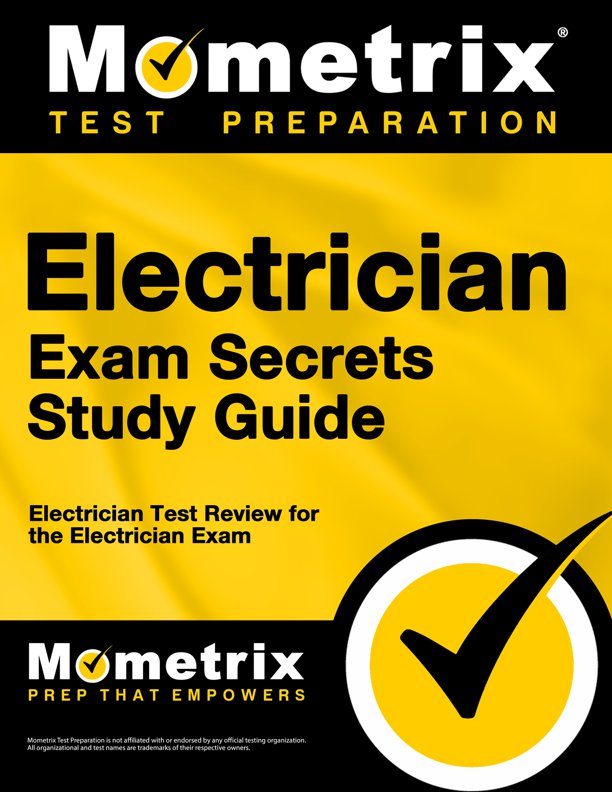 Mometrix · SponsoredElectrician Exam Secrets Study GuideFull review of the National Electrical Code, electrical theory, and safety practices for the journeyman and master electrician exams — concept breakdowns and practice questions built for a first-try pass.See the study guide →
Costs by State
Licensing costs vary dramatically. Here's what you'll pay in 10 states for electrician licensing:
| State | Application | Exam | Renewal | Renewal Period |
|---|---|---|---|---|
| California | $450 | N/A | $470 | 2 years |
| Florida | $249 | $150 | $209 | 2 years |
| Texas | $30 | $78 | $30 | 1 year |
| Arizona | $100 | $127 | $480 | 2 years |
| Utah | $210 | N/A | $128 | 2 years |
| Washington | $107.6 | $65 | $76.9 | 3 years |
| Tennessee | $50 | $57 | $50 | 2 years |
| Georgia | $110 | $30 | $75 | 2 years (even-numbered years, by June 30) |
| Alabama | N/A | $115 | $35 | 2 years |
| Nevada | $300 | $140 | $600 | 2 years |
Texas stands out as one of the most affordable states for electrician licensing, with just $30 for the application and $78 for the exam. California is among the most expensive at $450 for the application alone, plus $200 for the initial license.
States Without Statewide Electrician Licensing
5 states do not require a statewide electrician license. In these states, licensing is handled at the city or county level:
- Illinois (IL) -- Illinois has no statewide electrician license. Licensing is handled entirely at the municipal level....
- Indiana (IN) -- Indiana does NOT issue a statewide electrician license. All electrician licensing is handled at the ...
- Kansas (KS) -- Kansas has NO statewide electrician license. Licensing is entirely local. Wichita (Sedgwick County M...
- New York (NY) -- NYC has the most stringent requirements. Albany requires a Master or Journeyman license through the ...
- Pennsylvania (PA) -- Philadelphia, Pittsburgh, Allentown, Reading, Harrisburg, Scranton, and other cities each have their...
Even in these states, major cities almost always have their own electrician licensing requirements. If you work in New York City, Chicago, Philadelphia, or Pittsburgh, you'll need a local license regardless of what the state requires.
Electrician License Reciprocity
Electrician reciprocity is more limited than general contractor reciprocity. Most reciprocity agreements are managed through the National Electrical Reciprocal Alliance (NERA), which allows journeyman electricians to transfer their credentials between member states.
Utah is one of the most reciprocal states for electricians, participating in NERA and offering licensure by endorsement for electricians licensed in most US states. Washington has a direct reciprocity agreement with Oregon for journey-level electricians.
Key things to know about electrician reciprocity:
- Reciprocity typically waives the trade exam only-- you still need to pass the state's laws and rules exam
- You must hold an active, unrestricted license in your home state
- Some states require a minimum number of years of licensure (often 1-5 years)
- Bond and insurance requirements still apply in the new state
Check your specific states on our reciprocity lookup tool or read our full reciprocity guide.
The Full Path: From Zero to Licensed Electrician
Here's a realistic timeline for someone starting from scratch:
- Register as an apprentice (Day 1): Apply for your apprentice registration or enroll in a registered apprenticeship program. Most states allow you to start working immediately under supervision.
- Complete apprenticeship (Years 1-4): Accumulate 8,000 hours of on-the-job training and complete required classroom hours. This is the longest phase.
- Pass the journeyman exam(Year 4-5): Study the current NEC edition and your state's electrical code. Most states allow you to sit for the exam once you're within a few hundred hours of completing your apprenticeship.
- Work as a journeyman (Years 5-8): Build your skills and business relationships. Accumulate the additional hours needed for your master license.
- Pass the master exam (Year 6-8): More advanced exam covering system design and supervision.
- Get your contractor license (Year 6-8+): Apply for your electrical contractor license, post bond and insurance, and start your business.
Total realistic timeline: 6-8 yearsfrom apprentice to licensed electrical contractor. It's a long road, but electricians are among the highest-paid trades, and demand continues to grow with the expansion of electric vehicles, solar installations, and smart building technology.
Frequently Asked Questions
Can I be an electrician without a license?
You can work as an electrical apprentice without a license in most states -- you just need to register and work under the supervision of a licensed electrician. You cannot perform electrical work independently or pull permits without a journeyman or master license. Working without proper credentials is illegal in every state and carries serious penalties.
How long does it take to become a licensed electrician?
The minimum path to a journeyman license is typically 4 years (8,000 hours of supervised work). Becoming a master electrician takes an additional 2-4 years. The full path from apprentice to licensed electrical contractor typically takes 6-8 years.
What is the NEC and why does it matter?
The National Electrical Code (NEC), published by the NFPA, is the standard for electrical safety in the United States. Nearly every state adopts the NEC (sometimes with amendments) as the basis for their electrical code. Every electrician exam in the country is based primarily on the NEC. The current edition is the 2023 NEC, though some states still use the 2020 edition.
Do I need a separate license for each state I work in?
Yes. Electrician licenses are state-specific (or city-specific in states without statewide licensing). However, some states have reciprocity agreements that waive the trade exam if you hold a valid license in a partner state. See the reciprocity section above for details.
How much do electricians earn?
According to the Bureau of Labor Statistics, the median annual wage for electricians is approximately $61,590, with the top 10% earning over $99,000. Master electricians and electrical contractors typically earn significantly more. Earnings vary substantially by state, specialty, and whether you work for yourself or an employer.
Related Articles
States That Don't Require a Contractor License
Not every state requires a contractor license. Find out which states have no statewide requirement, and what local permits and registrations you may still need.
2026 Contractor Licensing Changes: What's New This Year
A roundup of the most significant contractor licensing changes in 2026 — new state requirements, updated fees, expanded reciprocity, and regulatory shifts.
Contractor Insurance Requirements by State
Which insurance do contractors need? State-by-state requirements for general liability, workers compensation, and other coverage needed to stay licensed and legal.